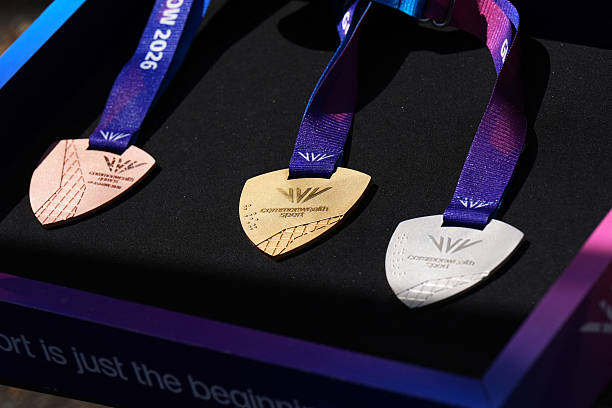
"A medal weighs only a few hundred grams. But for the athlete wearing it, it carries years of sacrifice."
When the Indian contingent arrived in Glasgow for the 2026 Commonwealth Games, expectations weren't the same as they had been four years earlier.
The Games looked different. Wrestling, badminton, hockey and shooting—sports that have traditionally contributed heavily to India's medal tally—weren't part of the programme. Naturally, many expected India's numbers to fall.
And on paper, they did.
India finished fourth overall with 39 medals—13 gold, 17 silver and 9 bronze. But reducing this campaign to a medal tally would be doing it a disservice.
Because Glasgow wasn't about numbers.
It was about people.
It was about athletes who had spent years chasing a dream that only lasts a few minutes on competition day.
It was about parents who invested everything in their children's ambitions.
Coaches who stood behind them after every defeat.
Teammates who trained together every single day knowing only one person could stand on the podium.
Every medal carried a different story.
Some athletes fought injuries.
Some fought financial hardship.
Some fought expectations.
And all of them fought themselves.
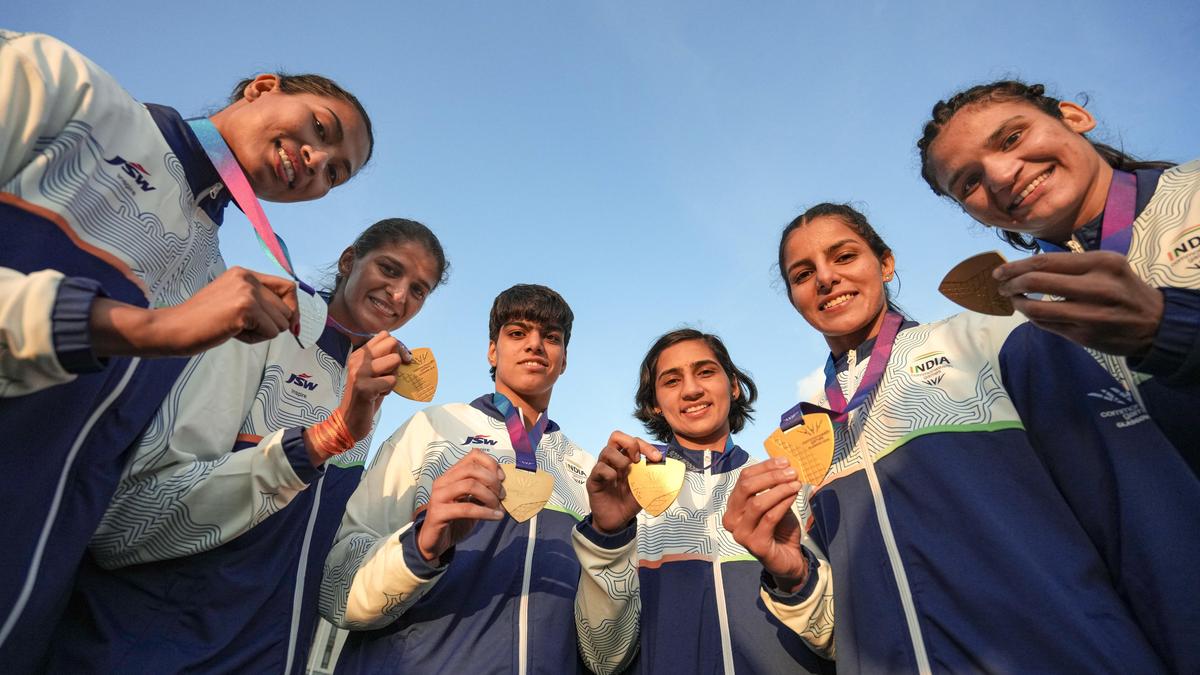
Boxing Didn't Just Win Medals. It Owned the Games.
If there was one sport that completely belonged to India in Glasgow, it was boxing.
Every day seemed to bring another Indian into a final.
Every final seemed to bring another medal.
By the time the competition ended, India had produced its greatest-ever Commonwealth boxing campaign, winning 10 medals, including an incredible seven gold medals.
But perhaps the most impressive part wasn't the medal count.
It was the depth.
This wasn't one superstar carrying the country.
This was an entire generation announcing itself.
Preeti Pawar set the tone early, defeating Canada's Scarlett Delgado with remarkable composure and ring control to claim India's first boxing gold of the Games. Even under pressure, she looked calm, patient and completely in control.
Then came Jaismine Lamboria, Sakshi Chaudhary, Priya Ghanghas, Arundhati Choudhary, Sachin Siwach and Ankush Panghal, each stepping into the ring with the confidence of athletes who knew they belonged on the biggest stage.
One of the most fascinating personalities was Arundhati Choudhary.
She smiles while boxing.
Not after winning.
Not before entering the ring.
During the fight.
She has explained that smiling is her way of staying relaxed while also unsettling her opponents psychologically. It is unusual, but it worked beautifully as she won gold in the women's 70kg category.
Behind these victories, however, were years that nobody saw.
Morning road runs before sunrise.
Endless rounds of sparring.
Weight cuts.
Missed birthdays.
Painful defeats.
Learning how to lose.
Then learning how to win.
The gold medals were presented in Glasgow.
The champions were built years earlier.
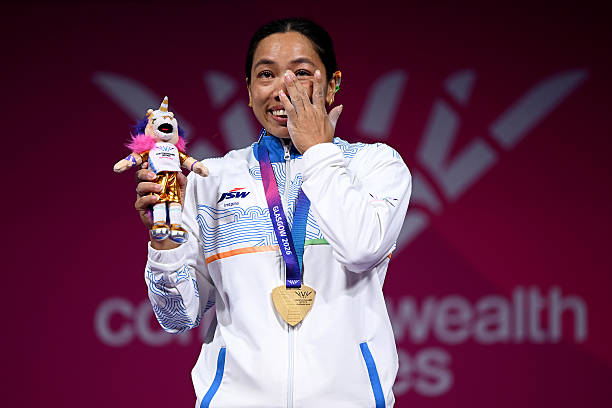
Mirabai Chanu: A Champion Who Keeps Raising the Bar
Every generation produces athletes who redefine consistency.
For India, Mirabai Chanu has become one of them.
By winning another Commonwealth Games gold, she completed a remarkable hat-trick of Commonwealth titles, while also breaking the Games record with a total lift of 190 kg.
It is easy to celebrate the medal.
It is much harder to appreciate the pressure.
When Mirabai competes, people don't simply hope she wins.
They expect her to.
Living with those expectations year after year is perhaps more difficult than lifting the weights themselves.
From a small village in Manipur to becoming an Olympic medallist and one of India's most respected athletes, Mirabai has shown that greatness is rarely built through one extraordinary performance.
It is built through extraordinary consistency.
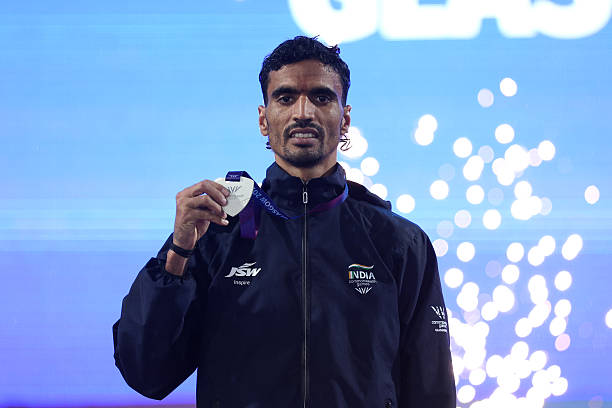
Gulveer Singh: The Loneliest Road to the Podium
Distance running doesn't often dominate headlines.
There are no dramatic knockouts.
No explosive lifts.
Just kilometres of training.
Again.
And again.
And again.
That is why Gulveer Singh's campaign felt so special.
He became the only Indian athlete to win two medals in Glasgow, standing on the podium in both the 5,000m and the 10,000m.
Distance runners spend years chasing improvements measured in seconds.
Sometimes milliseconds.
Their greatest competitor is usually themselves.
Gulveer's medals were proof that patience eventually finds its reward.
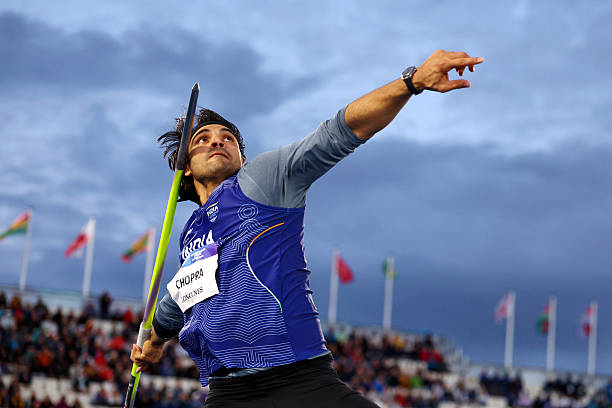
Neeraj Chopra: When Silver Still Feels Historic
There are very few athletes whose standards become so high that silver feels unusual.
Neeraj Chopra is one of them.
His silver medal in Glasgow reminded everyone how difficult it is to remain among the world's very best year after year.
Champions aren't defined only by the medals they win.
They're defined by the standards they set.
And Neeraj has raised Indian athletics to a level where every competition feels significant.
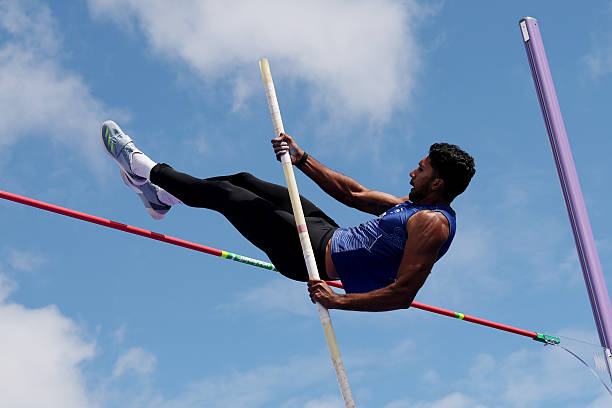
Tejaswin Shankar's Historic Decathlon Journey
The decathlon is often described as the toughest event in athletics.
Ten disciplines.
Two exhausting days.
No room for weakness.
Tejaswin Shankar's medal wasn't just another addition to India's tally.
It was a breakthrough moment for Indian athletics in one of its most demanding events.
His performance reflected years of work in a discipline that rarely receives the attention it deserves.
Weightlifting: India's Reliable Medal Factory
If boxing stole the spotlight, weightlifting quietly reminded everyone why it has been one of India's strongest sports for decades.
Mirabai Chanu led the way.
But she wasn't alone.
Rishikanta Singh, Raja Muthupandi, Gyaneshwari Yadav, Valluri Ajaya Babu and Bindyarani Devi all contributed medals, once again proving that Indian weightlifting continues to produce world-class talent.
The beauty of weightlifting lies in its simplicity.
One platform.
One barbell.
One opportunity.
Months of preparation come down to a few seconds.
There is nowhere to hide.
And India rose to the occasion.
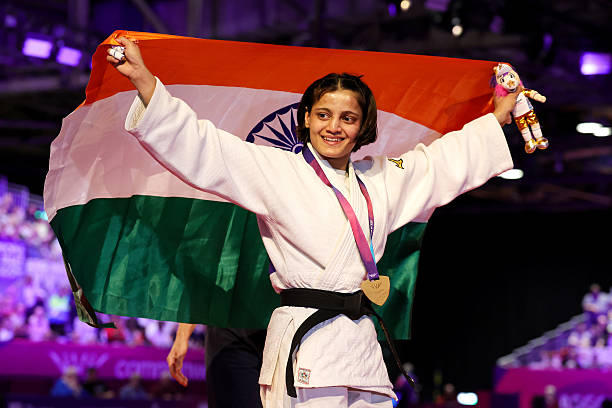
Judo's Historic Breakthrough
For years, judo existed outside the mainstream conversation in Indian sport.
Not anymore.
Glasgow became a turning point.
Asmita Dey and Harsh Singh delivered historic gold medals, while India's judokas collectively produced one of the country's finest Commonwealth campaigns.
Their victories weren't just medals.
They were reminders that Indian sport is steadily becoming more diverse.
Success is no longer limited to a handful of disciplines.
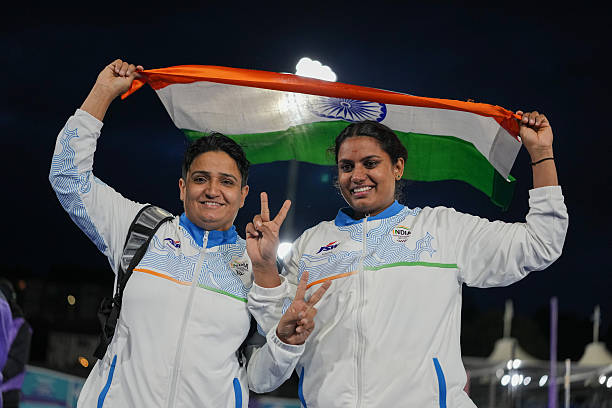
Para Athletes Who Inspired Everyone
One of the most heartwarming chapters of India's campaign came from its para-athletes.
Sharmila Dhankar, Dilip Gavit and Soman Rana all won gold medals, helping India achieve its best-ever para-sport performance at the Commonwealth Games.
Every one of these victories represented years of overcoming obstacles that extended far beyond sport.
Their medals weren't symbols of sympathy.
They were symbols of excellence.
Jhandu Kumar's Bronze Meant More Than Bronze
Sometimes the most memorable medal isn't gold.
It belongs to the athlete whose story touches everyone.
India's first medal in Glasgow came through Jhandu Kumar in para powerlifting.
Born into modest circumstances and having overcome the effects of polio, Jhandu's bronze became one of the emotional highlights of the Games.
His medal reminded us that greatness isn't determined by where someone begins.
Only by how determined they are to keep moving forward.
The Women Who Led India's Charge
One of the defining themes of Glasgow was the performance of India's women athletes.
From boxing to weightlifting, para athletics and judo, they consistently delivered under pressure.
In fact, eight of India's thirteen gold medals were won by women, a powerful reflection of how women's sport continues to drive India's success on the international stage.
This wasn't an exception.
It was another sign that Indian women's sport has entered a new era.
A Campaign Bigger Than the Medal Table
Yes, India finished fourth.
Yes, the medal tally was lower than previous editions because several traditional medal-winning sports were absent.
But the campaign also revealed something even more important.
India now has champions emerging across a much wider range of sports.
Boxing.
Weightlifting.
Athletics.
Judo.
Para athletics.
Para powerlifting.
That diversity is perhaps the biggest victory of all.
The Road Now Leads Home
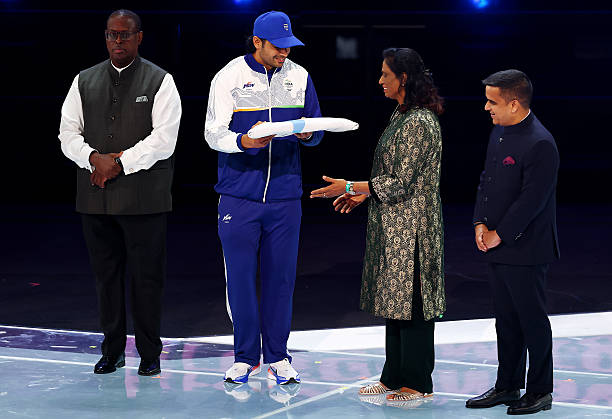
As the closing ceremony came to an end, the Commonwealth flag was handed to India ahead of the 2030 Commonwealth Games in Ahmedabad.
For every athlete who stood on the podium in Glasgow, that moment carried special meaning.
Some will dream of winning again.
Others will dream of winning in front of a home crowd.
And somewhere across India, countless children watched these Games imagining themselves wearing the tricolour one day.
Perhaps that is the true legacy of Glasgow.
Not the medals.
Not the rankings.
But the dreams it has inspired.
Years from now, people may forget whether India won 39 or 40 medals.
But they will remember Mirabai lifting history once again.
They will remember the Indian boxers dominating the ring.
They will remember Gulveer running himself into the record books.
They will remember para-athletes showing the country what resilience truly looks like.
Because medals eventually gather dust.
Stories never do.
Glasgow wasn't simply another Commonwealth Games for India.
It was proof that the country's sporting future isn't arriving someday. It's already here.