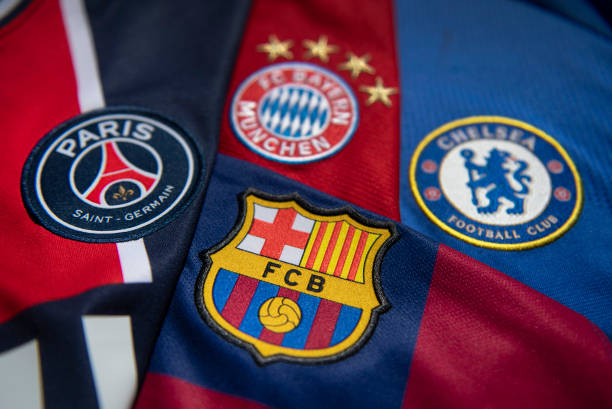
The World Cup gave us the spectacle. Now, Europe gets back to business.
For a few weeks, club football almost felt like it didn't exist. The usual weekend arguments disappeared, the league tables stopped mattering and the familiar club colors were replaced by national flags. Instead of Premier League rivalries and Champions League nights, the football world was focused on one thing: the World Cup.
Now the World Cup is over, and football is going back to normal.
Or at least, as normal as football ever gets.
The new European season is almost here. The Premier League, La Liga, Serie A, Bundesliga and Ligue 1 are all preparing to get underway, bringing back the rivalries, pressure and weekly drama that make club football so addictive. Some teams are trying to defend what they achieved last season, some are rebuilding, and a few are entering completely new eras.
That is what makes the 2026/27 season so interesting. There isn't one single storyline dominating European football. There are several of them happening at the same time.
And eventually, they will all collide.
THE PREMIER LEAGUE: A CHAMPION WITH A TARGET ON ITS BACK
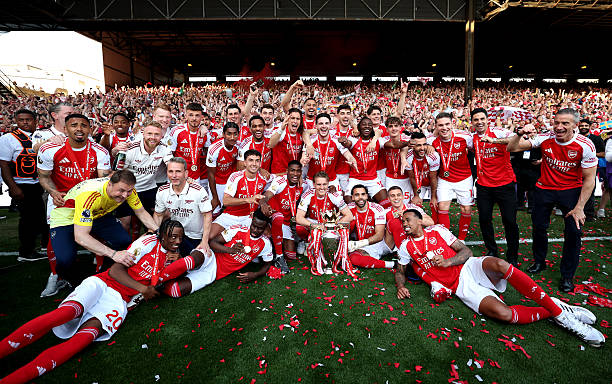
The Premier League gets going on 21 August, with Arsenal beginning their title defense. After waiting 22 years to win the Premier League again, Arsenal finally have the trophy they spent so long chasing. But the moment you win it, the feeling changes. Last season, Arsenal were the team trying to catch everyone. This season, everyone is trying to catch them.
That is a completely different kind of pressure.
Mikel Arteta now has to prove that Arsenal's title wasn't simply the result of everything coming together at the right time. The real test is whether they can turn that success into something more permanent.
Behind them, though, the landscape has changed dramatically.
Manchester City are beginning life without Pep Guardiola. For more than a decade, Guardiola's name and Manchester City's identity were almost impossible to separate. His teams didn't just win; they changed the way English football was played. Now City have to show that the structure he built can survive without him.
Liverpool face an equally emotional change. Mohamed Salah has left Anfield, bringing an end to one of the defining individual stories of the Premier League era. Salah wasn't just a prolific goal scorer for Liverpool. He became part of the club's identity, and replacing that influence is about much more than finding another forward.
Then there is Chelsea, who have handed the job to Xabi Alonso. Alonso arrives with the reputation of a manager who knows how to build a team, but Chelsea is a very different challenge from anything he has faced before.
Put all of that together and the Premier League suddenly feels wide open. Arsenal have the trophy, City have entered a new era, Liverpool are adjusting to life without Salah and Chelsea are starting another project.
For once, even the biggest clubs don't seem to know exactly what comes next.
And that's a very good thing for the league.
LA LIGA: THE RETURN OF THE SPECIAL ONE
If the Premier League has uncertainty, Spain has something even more entertaining: José Mourinho is back at Real Madrid.
It feels almost strange to write that sentence.
Mourinho's first spell in Madrid was filled with titles, controversy, press conferences and some of the most intense El Clásico battles football has ever seen. More than a decade later, he is back, this time taking over a Madrid side that has gone through two trophyless seasons.
The timing could hardly be more interesting.
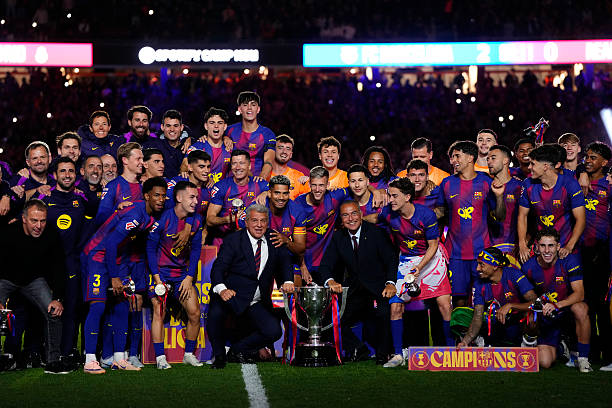
Barcelona are coming off consecutive La Liga titles and have built a team around a generation of young players that could define the club for years. At the centre of that generation is Lamine Yamal, who has somehow already moved beyond the label of "wonderkid." He is now expected to be one of the main players in world football.
That makes Madrid's challenge even more fascinating. They have Kylian Mbappé, one of the biggest stars in the game, while Mourinho brings an entirely different personality and philosophy to the club.
And then, of course, Atlético Madrid are still there. Diego Simeone has spent years making Atlético the club nobody enjoys playing against, and he will have no intention of simply watching Barcelona and Madrid fight for the title.
La Liga begins on 15 August, and it is difficult not to look ahead already.
Because somewhere down the line, there is an El Clásico waiting.
And this time, Mourinho will be back in the middle of it.
SERIE A: WHERE NOTHING IS EVER REALLY SETTLED
Italian football has always had its own rhythm. The excitement isn't always immediate. Sometimes the story takes months to develop before suddenly becoming impossible to ignore.
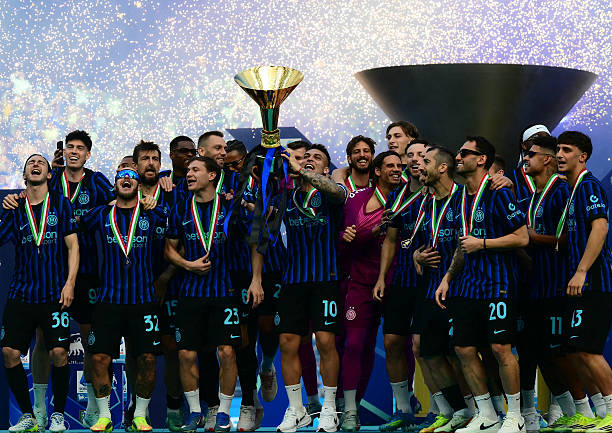
Inter Milan enter the new season as the defending champions after winning their 21st Scudetto. They now face the difficult task of staying at the top while the clubs around them try to close the gap.
Napoli will want another shot at the title, Juventus are still trying to restore themselves to the position they occupied for so long, and Milan are capable of making the race interesting if they find consistency.
That is what makes Serie A so difficult to predict. A team can look brilliant in September and completely different by February. Injuries, tactics, fixture congestion and one bad run can completely change the picture.
The season starts on 23 August, but don't expect the title race to reveal itself immediately.
In Italy, the league table in August rarely tells you much about the league table in May.
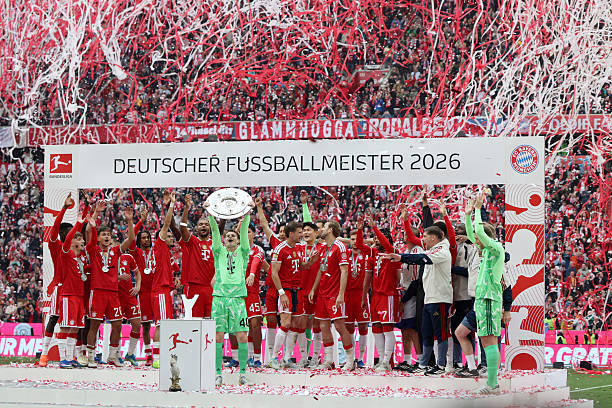
BUNDESLIGA: THE BAYERN QUESTION
Germany has a much simpler problem.
Everyone knows who they want to beat.
Bayern Munich.
Bayern are champions again, having secured their 34th German championship last season. They remain the standard in German football, and every serious challenger has to measure itself against them.
Borussia Dortmund will want to make the race more competitive, while Bayer Leverkusen have already shown that Bayern can be knocked off the top. RB Leipzig are another club capable of making things interesting.
But competing with Bayern is not only about having better players. It is about surviving an entire season against a club that has become incredibly good at turning pressure into routine.
The Bundesliga begins on 28 August, and there is a familiar feeling around the competition.
Everyone knows Bayern are the team to beat.
The only question is whether someone can actually do it.
And while the football itself is obviously a huge part of the Bundesliga's appeal, the atmosphere remains something special. Packed stands, standing supporters and enormous levels of noise make German football feel different from almost anywhere else in Europe.
Sometimes, even watching a supposedly routine Bundesliga match feels like an event.
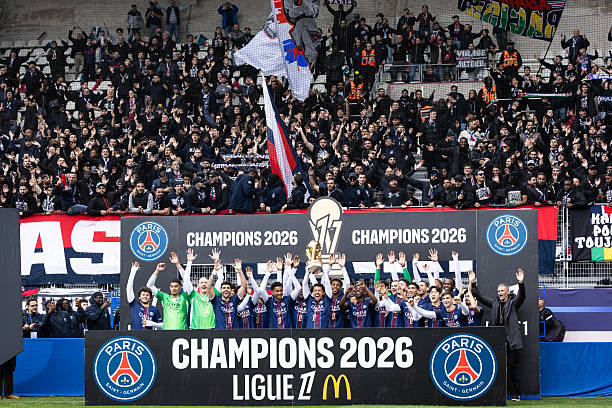
LIGUE 1: PSG AND THE SEARCH FOR THE NEXT CHALLENGE
France has a different kind of problem.
For years, Ligue 1 has revolved around one question: who can challenge Paris Saint-Germain?
PSG remain the dominant force in French football, but their ambitions have changed. Winning Ligue 1 is expected. The bigger question now is what they can achieve outside France.
That doesn't make the domestic competition irrelevant, though.
Clubs such as Marseille, Monaco and Lille can still make life difficult, while Ligue 1 continues to produce young players who quickly attract attention from clubs across Europe.
That is one of the league's biggest strengths. You can watch a player who is barely known outside France one season and then see him become one of Europe's most talked-about prospects the next.
The 2026/27 Ligue 1 season begins on 21 August, with PSG starting their campaign against Rennes on 23 August.
And somewhere in France, there is almost certainly another young player waiting to introduce himself to the football world.
We just don't know his name yet.
BUT EUROPE IS BIGGER THAN FIVE LEAGUES
This is where the European season becomes really interesting.
The Premier League, La Liga, Serie A, Bundesliga and Ligue 1 may have their own stories, but none of them exist in isolation.
Their best teams eventually meet in the Champions League.
A club that dominates England suddenly has to deal with a Spanish giant. A German side has to face an Italian team that plays an entirely different style of football. A young player who looks unstoppable domestically suddenly finds himself playing in front of 70,000 people at a stadium he has only ever seen on television.
That is where reputations are really tested.
Domestic football can make you a star.
Europe can make you a legend.
And this season, there are plenty of clubs with unfinished business in the Champions League.
THE WORLD CUP IS OVER. NOW WHAT?
There is another interesting factor this season: the players have just experienced the biggest tournament in international football.
Some will return as heroes. Some will return disappointed. Others will come back with a completely different reputation from the one they had when they left.
For young players especially, a World Cup can change everything. One great performance can introduce you to millions of people who had never watched you before. Suddenly, your club career looks different.
But the strange thing about football is how quickly all of that disappears.
The World Cup final might have been played in front of a global audience, but a few weeks later the same player could be worrying about a difficult away game on a rainy Saturday.
The national shirt goes back into the wardrobe.
The club shirt comes out.
And suddenly, it is back to the basics.
Win the game. Get the three points. Move on.
FIVE LEAGUES. ONE SEASON. ENDLESS QUESTIONS.
So who will own European football this season?
Will Arsenal prove that their Premier League title was the beginning of an era? Can Barcelona turn their young core into a dynasty? Can Mourinho bring Real Madrid back to the top? Can anyone seriously challenge Bayern in Germany? Can Inter defend their Scudetto? And can PSG turn their dominance at home into something even bigger in Europe?
There are no answers yet.
And that's exactly why the start of a football season is so exciting.
At this point, everyone is still undefeated.
Every club still has a chance.
Every new signing still looks like a genius.
Every young player is still the next superstar.
Every manager still has the answers.
By May, it will be a very different story.
Some teams will have celebrated. Some will be wondering where it all went wrong. Players nobody expected will become household names, while established stars will suddenly find themselves under pressure.
There will be late winners, shocking defeats, title races that go down to the final day and Champions League nights that become part of football history.
For the next nine months, Europe becomes football's biggest stage again.
The World Cup gave us the spectacle.
Now comes the weekly obsession.
The arguments.
The rivalries.
The goals.
The heartbreak.
The celebrations.
And all the beautiful chaos that comes with them.