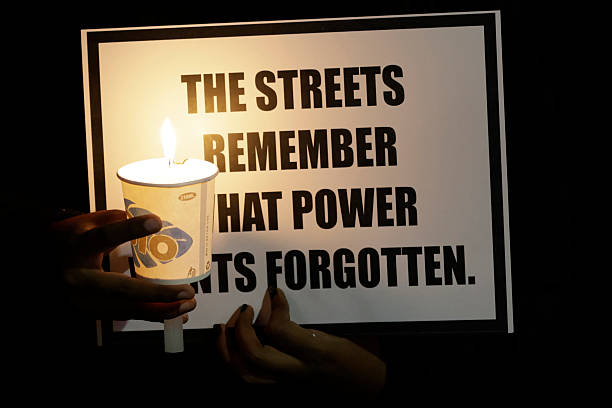
"When a movement forgets its purpose, the cause becomes a casualty of the crowd."
On 15th May, during a Supreme Court hearing, Chief Justice of India Surya Kant made remarks comparing the unemployed youth of the country to "cockroaches." His remarks were directed at young people who were not earning an income and were sitting idle while trying to figure out their lives. The statement received widespread criticism and online backlash, as many found the comparison disturbing and demeaning.
The term "Cockroach" led to the birth of the Cockroach Janta Party (CJP), a satirical Instagram page started by US-based political strategist Abhijit Dipke, who has been reported to have links with the Aam Aadmi Party. Dipke's CJP aimed to reclaim the term "Cockroach" as a symbol of youth resistance. The movement quickly gained traction on social media. Within a few hours, it had gained more followers than the Instagram pages of established political parties such as the BJP and the INC.
The page continued as a satirical, Gen Z-centric platform until it began questioning the repeated paper leaks over the years. On 3rd May 2026, the NEET examination was officially cancelled by the National Testing Agency (NTA), leading to a CBI probe and a re-test on 21st June. After a digitally circulated guess paper reportedly matched the actual questions, the re-test was conducted and the results were announced on 16th July.
The NEET paper had previously been leaked in 2024, 2021, 2016, and 2015. Paper leaks have been a major reason behind the rise in student suicides. Hardworking and talented candidates have often failed to receive a fair opportunity to pursue their dream careers because of such leaks. Years of perseverance, hard work, and dedication are rendered meaningless, as many deserving candidates reportedly choose suicide over reappearing the following year due to financial constraints, lack of time, or loss of hope.
Not only NEET, but several other professional-level examinations have also been affected by paper leaks over the years. The opposition claims that more than 152 examinations have been leaked under the Modi government, although paper leaks have occurred for decades under previous governments as well. NEET, being one of the country's most important examinations, receives significant public attention whenever such incidents occur.
The suicide rate among students appearing for competitive examinations has increased over the years. Apart from paper leaks, caste-based reservation has also been one of the major reasons many people claim to have lost trust in the Indian education system.
The 2026 NEET paper leak angered students, who demanded accountability. Meanwhile, CJP intensified the movement by announcing an indefinite sit-in protest at Jantar Mantar, New Delhi, while continuing to demand the resignation of Union Education Minister Dharmendra Pradhan. On 6th June, Abhijit Dipke arrived from the United States, and the media captured photographs of him leaving the airport while holding the autobiography of Dr. B.R. Ambedkar.
The protest continued with the slogan "Pradhan Go Back." It received widespread attention across social media platforms. Dipke also appealed to students to join the protest instead of preparing for the re-test.
On 28th June, prominent Ladakhi environmentalist and activist Sonam Wangchuk joined the protest and announced an indefinite hunger strike along with six other members of the All India Students Association.
In interviews, Dipke stated that he would not allow politics to influence the protest. However, the movement was soon supported by opposition leaders such as Rahul Gandhi, Arvind Kejriwal, Manish Sisodia, and others. Prominent celebrities, including Prakash Raj and Shabana Azmi, who are known for their political views, also joined the protest. The movement gained widespread public support, particularly following Sonam Wangchuk's hunger strike.
On 18th July, a major headline emerged across the country when Sonam Wangchuk was removed from the protest site by the Delhi Police and shifted to Safdarjung Hospital. His family later demanded that he be transferred to a hospital of their choice. Dipke and several others subsequently began a hunger strike, despite Dipke having previously stated that he could not go without food for more than two hours.
The protest had initially focused on the paper leak until several statements, slogans, and speeches were alleged to be anti-national and anti-Hindu. CJP's former spokesperson, Vijeta Dahiya, made critical remarks about Premanand Maharaj, a well-known Hindu saint. During one interview, a girl was heard saying, "Ram Mandir or whatever the f*ck." Apart from these statements, several posters and slogans were also visible among the crowd. Some interviewees were seen making remarks perceived as disrespectful towards the Indian Armed Forces while overlooking the sacrifices made by soldiers who have been martyred over the years in service of the nation. According to critics, the focus of the protest shifted from the paper leak to issues such as Article 370, the Bengal elections, the Punjab elections, the Naxalite-Maoist insurgency, and other topics they considered unrelated to the original cause.
20th July 2026 turned out to be a black day for India as CJP leaders gathered protesters at Jantar Mantar and attempted a march towards the Parliament of India while the Monsoon Session was underway. Police personnel on duty blocked access to Parliament using barricades as the protesters advanced. Meanwhile, CJP representatives Ashutosh Ranka and Saurav Das met Union Health Minister J.P. Nadda to present their demands, which included Wangchuk's release, Dharmendra Pradhan's resignation, and financial compensation of ₹1 crore for the families of the deceased.
A large and furious crowd marched towards Parliament, prompting security forces to use baton charges and tear gas to disperse the protesters. Some protesters reportedly clashed with the Delhi Police through stone-pelting. According to reports, at least 118 police personnel were injured and 15-20 vehicles were damaged. Around 60 protesters were also injured and admitted to Ram Manohar Lohia Hospital.
The violence resulted in widespread support for the protesters from several celebrities and sections of the public. Innocent students were beaten in a crowd that also allegedly included several anti-national elements. During the clashes, the CJP leadership was reportedly nowhere near the confrontation. Abhijit Dipke remained seated on top of a truck, while Vijeta Dahiya did not participate in the protest. Later that day, Dahiya posted a video of himself eating a burger without showing any concern for the injured students. This eventually led to his removal as CJP's spokesperson. Later, Rahul Gandhi and several other opposition leaders staged a protest outside the Prime Minister's residence. They were subsequently detained by the Delhi Police before being released.
The Delhi riots triggered protests across the country. Some celebrities participated in demonstrations in Mumbai, where both they and several students were detained by the police. Protesters in Delhi later returned to Jantar Mantar and resumed their demonstration. Since the riots, the Delhi Metro Rail Corporation (DMRC) has kept the gates of 16-17 metro stations around Connaught Place closed. Dharmendra Pradhan's daughter has also faced criticism because she is pursuing her higher education abroad. Both Houses of Parliament were adjourned for four consecutive days, disrupting the Monsoon Session.
On 23rd July, Prime Minister Narendra Modi announced the creation of fast-track courts to expedite paper leak cases. On 24th July, as the clock struck midnight, the Prime Minister addressed the nation and the protesters through a video message. Education Secretary Vineet Joshi, who was responsible for overseeing the functioning of the NTA and CBSE, was replaced by Naresh Pal Gangwar. Shortly before the Prime Minister's address, Sonam Wangchuk ended his 26-day hunger strike after J.P. Nadda and Jitendra Singh Rana provided written assurances that cases against non-violent protesters would be withdrawn and compensation would be provided to the families of the deceased NEET aspirants.
Abhijit Dipke has announced that the protest will continue until Dharmendra Pradhan resigns.
Will the future of India be rewarded with a fair education system, or will the CJP instead choose to embrace the political environment?